
Why Was King Saul So Damn Good-Looking?
/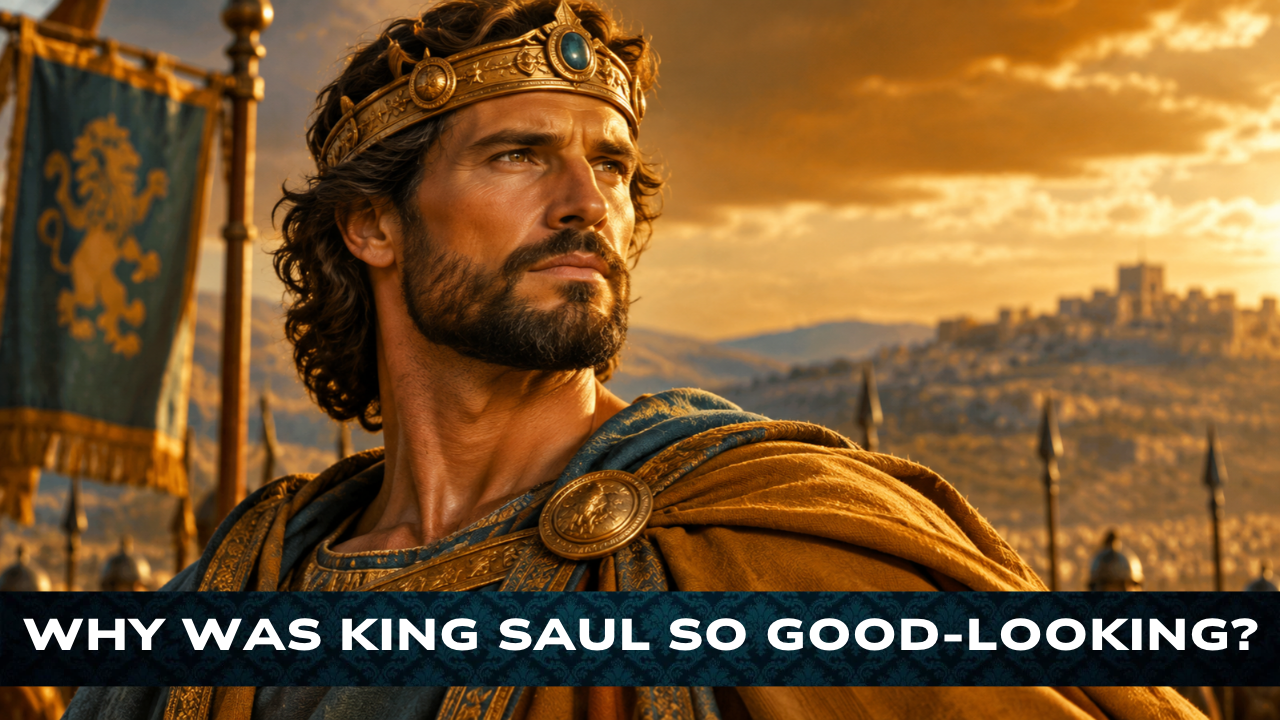
The Bible has a lot of weird little details that most people just skate past. One of them is this absolute flex on Saul’s appearance in 1 Samuel 9:2. The NASB puts it like this: “He had a son whose name was Saul, a choice and handsome man, and there was not a more handsome person than he among the sons of Israel; from his shoulders and up he was taller than any of the people.”
Not just handsome. Not just tall. The handsomest and tallest guy in the entire country. Head and shoulders above the competition, literally.
Now, if you’ve spent any time with the books of Samuel, you know the writers are not exactly Team Saul. The whole narrative arc is basically “Saul was the people’s choice and it went badly; David was God’s choice and it went… complicated but ultimately better.” The text spends a lot of energy making Saul look insecure, rash, disobedient, and eventually murderous. So why go out of your way to tell us he was the best-looking man in Israel?
That’s a very pro-Saul thing to say for a pro-David writer. It feels odd. Almost like a leftover from a different story.
Here’s where it gets interesting.
In a video I made, I floated a rather impolite theory: that David was the actual father of Jonathan, and that David had, shall we say, gotten familiar with at least a couple of Saul’s wives or concubines. It’s the kind of palace intrigue that ancient Near Eastern courts specialized in, and that the Bible itself is not above recording when it suits the narrative (see Bathsheba, for example). If that theory has any legs, then the glowing description of Saul’s looks starts to make a different kind of sense.
The biblical author is trying to shut that rumor down. Saul was better looking than David, better looking than anyone, so how on earth could David have seduced his wife or concubine? The text is basically saying: look at this specimen of a man. You really think his women were out shopping for alternatives?
It’s a narrative counter-punch. “No, the good-looking one was Saul. David didn’t have that kind of game.”
But the story doesn’t stop there. Fast-forward to the anointing of David in 1 Samuel 16. Samuel shows up at Jesse’s house, takes one look at the oldest son Eliab, and thinks, “Surely this is the one.” Eliab is impressive. He looks the part. And Yahweh immediately shuts it down: “Do not look at his appearance or at the height of his stature… man looks at the outward appearance, but the Lord looks at the heart” (1 Sam 16:7, NASB).
Classic. God doesn’t care about the packaging. Heart over height. Character over charisma. All the Sunday-school lessons write themselves.
And then David walks in. The text can’t help itself: “Now he was reddish, with beautiful eyes and a handsome appearance” (1 Sam 16:12, NASB).
Wait. What?
We just got a theological mic drop about not judging by appearances. The previous king was chosen in part because he looked the part, and that turned out to be a problem. Now the new chosen one… also looks the part? Ruddy, beautiful eyes, handsome. The same category of language used for Saul, just dialed down a notch so he’s not *quite* the tallest and handsomest in the land.
This is the kind of tension that should make a careful reader sit up. Why go to the trouble of having God reject appearance as a criterion, only to immediately note that the chosen one is, in fact, good-looking?
One possibility is that the note about David’s looks is a later redaction.
Picture the original layer of the story. The writer is trying very hard to distance David from any reputation as a ladies’ man who might have been capable of seducing Saul’s women. So David is not presented as especially attractive. The emphasis is on the heart, on the unexpected choice, on the youngest son who was out with the sheep. The point is that God picks the one who doesn’t look like a king. That undercuts the idea that David had the kind of magnetic physical presence that could cause marital chaos in Saul’s household.
Years later, maybe generations later, the memory of David as a casanova has faded. The scandal has lost its heat. What remains is the cultural memory of David as the great king, the ideal ruler, the man after God’s own heart. And now a later editor has a different problem: he doesn’t want readers thinking the great King David was ugly. Or even average-looking. So he slips in a little upgrade. “Reddish, with beautiful eyes and a handsome appearance.” Just enough to make him presentable. Not enough to make him competition for Saul’s recorded good looks.
That kind of redaction is exactly how these texts grew. Different concerns at different times leave fingerprints. The earlier writer is worried about David’s sexual reputation and the political implications of it. The later one is worried about the aesthetics of the national hero. Both can be true in the same finished text without either being fully aware of the other’s agenda.
This also helps explain why Saul gets the full-throated beauty contest victory. In a story that is otherwise busy dismantling Saul’s legitimacy, the one place the text goes out of its way to praise him is the one place that serves a larger apologetic purpose: protecting David from a particular kind of accusation. “Saul was the handsome one. Don’t even start with the other rumors.”
Of course, none of this is the kind of thing you can prove in a laboratory. Biblical narrative doesn’t come with source footnotes. But the oddities are real. A pro-David text that can’t help but tell you how good-looking Saul was. A divine rejection of appearance-based selection followed immediately by a description of the chosen one’s good looks. Those are the kinds of seams that source critics and redaction critics live for.
And once you start noticing them, the story gets a lot more human. These weren’t disembodied theological statements floating in the ether. They were stories told and retold by people who had political skin in the game, family reputations to protect, and, eventually, a national mythology to polish. Saul’s good looks aren’t just a throwaway detail. They’re doing work. They’re part of an argument about who David was, and who he wasn’t.