
Why Does the Book of Jonah End So Abruptly?
/
The canonical Book of Jonah concludes with what many literary critics and biblical scholars consider a jarring anti-climax. God poses a rhetorical question regarding His compassion for the vast population of Nineveh, and the text simply stops.
While historical-critical scholarship traditionally attributes this abruptness to intentional didactic irony, a tension exists within the text itself. The final chapter suffers from two notable internal inconsistencies, or narrative "glitches", that suggest a complicated editorial history. By applying source criticism and analyzing structural anomalies, we can propose a reconstructed proto-narrative that resolves these glitches and uncovers a radically different original story.
The Anomalies of the Received Text
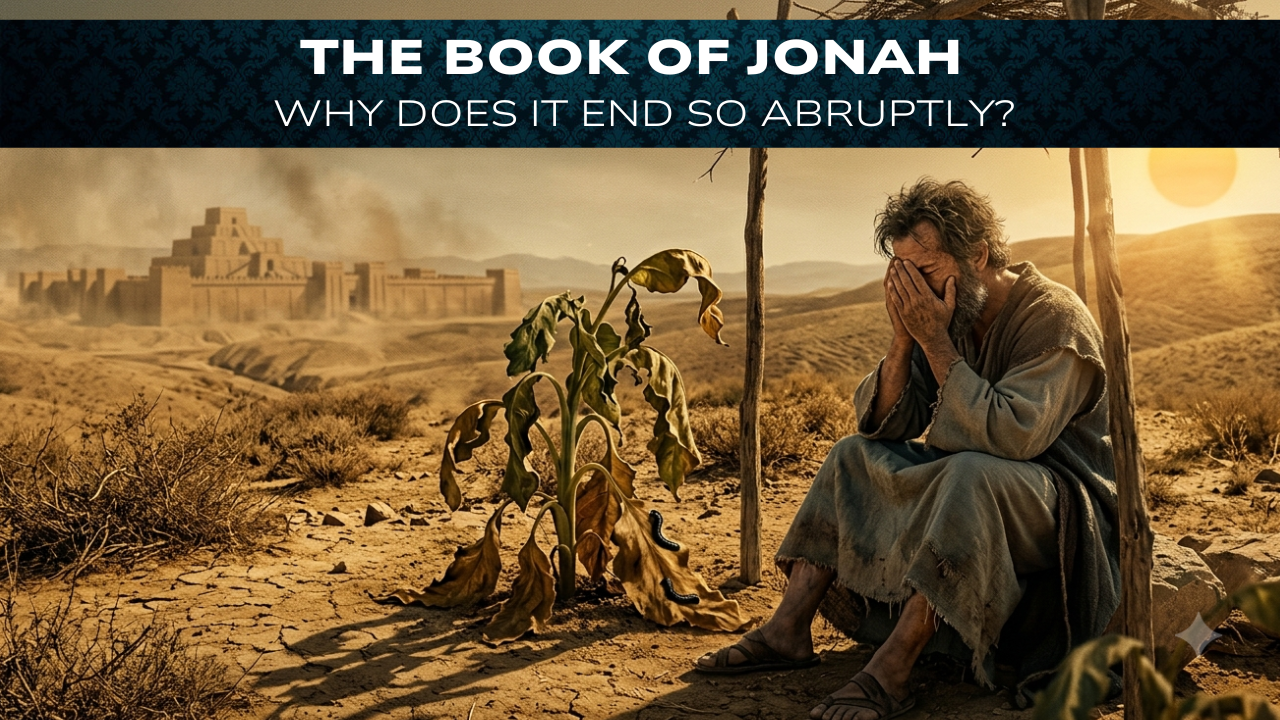
The first glitch involves duplicate etiologies for Jonah’s shade outside the city of Nineveh. In Jonah 4:5, the text states that Jonah constructed a temporary booth and sat under its shade. Immediately following, in verse 6, we read that Elohim (God) caused a fast-growing plant to provide shade for him. Textually, the plant renders the booth entirely redundant.
The second glitch is chronological and psychological:
Jonah sits east of the city to "see what would happen to the city" (Jonah 4:5).
However, by this point in the canonical timeline, Jonah has already expressed intense anger precisely because he knows God has relented from destroying Nineveh (Jonah 4:2). Sitting down to watch a settled matter introduces a significant logical fracture in the character's motivation.
Stratigraphy of the Text: Divine Names and Redaction
To resolve these fractures, we can look to the standard mechanics of biblical redaction. A primary tool for separating textual layers is the shifting terminology used for the divine. Throughout Jonah, we encounter both the tetragrammaton (Yahweh) and the generic title Elohim, occasionally combined as Yahweh Elohim.
When an Biblical author updated or appropriated an older text belonging to a different regional deity, they frequently substituted the specific foreign divine name with the generic Elohim. Concurrently, the redactor introduces their own deity, in this case, Yahweh, to assert theological supremacy. In the oldest layer of the Jonah material, this Elohim may well have masked an original devotion to the Canaanite high god, El, since he is mentioned in the text but it is impossible to know whether El was the original name or whether the Yahwist author was simply trying to promote the idea that Yahweh was the highest god, which El was considered to be.
By separating the two layers, the glitches mentioned above are resolved. You can see my source attributions here.
The text that contains “Elohim” forms the basis for what was the original Jonah narrative. However, we'll need to fill in the missing gaps by taking a look at what the Yahwist layer says. This is more difficult as the Yahwist includes elements from the original narrative as well as new material.
The Subverted Descensus ad Inferos
The most significant clue to the original narrative lies in Jonah’s famous prayer from the belly of the fish (Jonah 2). The Yahwist layer frames this poem as a metaphorical expression of a near-dreath at sea. Yet, the vocabulary utilized is explicitly characteristic of an ancient Near Eastern descensus ad Inferos—a literal journey to the underworld.
This is characteristic of how an author changes a narrative. It's a common technique that takes something literal and makes it metaphorical. It provides a plausible misunderstanding for the original reader who had heard Jonah had gone to the underworld. The Yahwist author switched to poetry for that section and made it a metaphor instead.
Jonah speaks of crying out from the belly of Sheol (the underworld), navigating the "pit," and being trapped by the "bars" of the earth forever. Furthermore, the text repeatedly emphasizes Jonah going "down": down to Joppa, down into the ship's hold, and down into the sea.
Even his heavy sleep during the storm operates as a classic ancient literary euphemism for death. In this case the Yahwist changes “sleep” from figurative to literal.
The Yahwist author systematically padded the text with maritime descriptions—"seaweed wrapped around my head," "the deep sea covered me"—to obscure a literal descent to the realm of the dead. For the Yahwist, cosmic geography was remapped: a literal trip to the edge of the cosmos (Sheol) was converted into a geographical voyage to the edge of the known world (Tarshish).
This fits a broader pattern I have argued elsewhere. Yahwist authors consistently appear uncomfortable with traditions involving people who journey to the underworld and return. I believe the same process occurred in the stories of Job and Enoch.
The Strange Desire to Die
Another clue comes from Jonah's repeated wish for death.
Three separate times he says:
I'd rather be dead than alive.
These statements occur near the end of the book, but they come after Jonah’s journey. They would need to be at the beginning of the story to make sense for a journey to the underworld.
Shifting the Timeline
Biblical authors would sometimes shift the timeline of the narrative to make it better fit their agenda. I’ve discussed previously how the Biblical authors did this with Amos and Isaiah. I believe that is what the Yahwist author has done in Jonah as well.
By restoring Jonah’s death declarations to the beginning of the story, they act as the structural catalyst for his descent into the underworld.
But let's examine why Jonah wanted to die in the original narrative. To do that, we need to understand who Jonah was in the Yahwist layer.
Was Jonah Even a Hebrew?
The Yahwist layer describes Jonah this way:
"I'm a Hebrew. I worship Yahweh, the God of heaven."
This follows a pattern I have elsewhere called begging the answer.
The author inserts a series of questions specifically so Jonah can provide the theological answer the editor wants readers to hear.
That raises an obvious question.
If this statement belongs to the Yahwist layer, what was Jonah's identity in the earlier story?
The Elohim layer never calls him a Hebrew. Instead, Jonah simply appears to come out of the city. The simplest reading is that Jonah himself was a Ninevite.
The Plant Makes Better Sense at the Beginning
The plant story becomes especially interesting once it’s moved to the beginning and the Yahwist interpretation is removed.
Why is Jonah angry? If the reason for Jonah being angry is in the Yahwist layer, what was the reason in the original narrative?
We may be able to answer that by taking a closer look at the story of the plant.
Jonah 4:6-9
6. Elohim made a plant grow up beside Jonah to give him shade and make him more comfortable. Jonah was very happy with the plant.
7 At dawn the next day, Elohim sent a worm to attack the plant so that it withered. 8 When the sun rose, Elohim made a hot east wind blow. The sun beat down on Jonah’s head so that he was about to faint. He wanted to die. So he said, “I’d rather be dead than alive.”
9 Then Elohim asked Jonah, “What right do you have to be angry over this plant?”
Jonah answered, “I have every right to be angry—so angry that I want to die.”
If we maintain that the plant is a symbolic parallel to Nineveh but remove the influence of the Yahwist, we can make better sense of why Jonah was angry.
If the plant growing and dying parallels the rise and fall of Nineveh, then Jonah is angry about the fall of Nineveh, not the sparing of it.
The plant becomes a symbolic preview of Nineveh's coming destruction. Jonah mourns both the loss of the plant and the coming loss of his city. His despair leads him to desire death.
That completely reverses the traditional interpretation.
By moving the plant story to the beginning, it provides a proper ending to the story as well.
"Elohim saw what they did. He saw that they turned from their wicked ways. So Elohim reconsidered his threat to destroy them, and he didn’t do it."
Suddenly everything fits.
When the timeline is restored to its original sequence, the original plot reveals itself:
The Threat: Elohim decrees the imminent destruction of Nineveh. Jonah is a Ninevite who has prospered because of the city's rise. Distressed by the prophecy, he leaves the city and waits east of it to see what will happen.
The Parable of the Plant: Elohim causes a plant to grow over Jonah, providing welcome shade. The next day Elohim destroys the plant. As the plant withers, Jonah sees a picture of Nineveh's coming fate. Overcome with grief, he expresses his desire to die.
The Descent: Elohim grants his request. Jonah descends into Sheol. Once there, however, Jonah realizes the horror of the underworld.
The Return: Terrified by the reality of the underworld, Jonah cries out from the pit. Elohim rescues him from death.
The Warning and Repentance: Having personally experienced the horrors of the grave, Jonah returns to his people with authentic urgency, warning them to avert the same fate. The city repents, and Elohim relents.
Below is the reconstructed original story of Jonah. To keep things clear, the verses taken directly from the biblical text are in regular print, while my own best reconstructions to fill in the missing gaps are in italics:
The word of Elohim came to Jonah. Elohim said, “In forty days I will destroy Nineveh because its wickedness has become great.”
But Jonah was a man of Nineveh, and his heart was bound to the greatness of the city, for he had prospered within its gates and grown rich under its shadows. Therefore, Jonah was filled with deep grief and a bitter spirit, and he wept for the beauty of Nineveh that was to perish.
Jonah left the city and sat down east of it and waited to see what would happen to the city. Elohim made a plant grow up beside Jonah to give him shade and make him more comfortable. Jonah was very happy with the plant.
At dawn the next day, Elohim sent a worm to attack the plant so that it withered. When the sun rose, Elohim made a hot east wind blow. The sun beat down on Jonah’s head so that he was about to faint. He wanted to die. So he said, “I’d rather be dead than alive.”
Then Elohim asked Jonah, “What right do you have to be angry over this plant?”
Jonah answered, “I have every right to be angry—so angry that I want to die.”
And Elohim said to Jonah, “As you have chosen, so shall it be.” And Elohim commanded the breath of life to depart from Jonah, and he died.
Jonah went down to the land of no return; he descended into the belly of Sheol. The gates of death closed behind him, and the iron bars of the pit shut him in forever. There was no light, but a terrifying darkness, and the shades of the forgotten whimpered in the dust. The terrors of the grave gripped him, and horror took hold of his soul, for he saw that the underworld was a place of endless weeping and ruin.
Out of the depths of the pit Jonah cried out to Elohim; from the heart of Sheol he wept and said, “Rescue me, O Elohim, from this house of corruption, for my soul faints!”
And Elohim heard the voice of Jonah from the midst of the dead. Elohim spoke to Sheol, and the pit vomited Jonah back onto the land of the living.
Then the breath returned to him, and Jonah arose from the earth, trembling and terrified by the horrors he had seen. He turned his face back toward his own people with a fierce and burning urgency, determined that they should not behold the darkness of death.
Jonah entered the city and walked for about a day. Then he said, “In forty days Nineveh will be destroyed.”
The people of Nineveh believed Elohim. They decided to fast, and everyone, from the most important to the least important, dressed in sackcloth.
When the news reached the king of Nineveh, he got up from his throne, took off his robe, put on sackcloth, and sat in ashes. Then he made this announcement and sent it throughout the city:
“This is an order from the king and his nobles: No one is to eat or drink anything. This includes all people, animals, cattle, and sheep. Every person and animal must put on sackcloth. Cry loudly to Elohim for help. Turn from your wicked ways and your acts of violence. Who knows? Elohim may reconsider his plans and turn from his burning anger so that we won’t die.”
Elohim saw what they did. He saw that they turned from their wicked ways. So Elohim reconsidered his threat to destroy them, and he didn’t do it.
Why Tell This Story?
If this reconstruction is close to the original, the narrative appears to have served two primary purposes.
First, it may have rescued a failed prophecy.
There may already have been a tradition that Jonah announced Nineveh's destruction, yet the city was not destroyed, at least not when the story was first composed. The narrative reframes the prophecy by explaining that the warning succeeded precisely because it led the people to repent. The plant may even preserve the symbolic illustration Jonah originally used when delivering that message. Reinterpreting visions to fit the Biblical author’s agenda is a common technique that was used.
Second, the story demonstrates that Elohim's authority extended everywhere. Even Sheol was within his power. Death itself was not beyond his reach.
Seen this way, Jonah was originally not a story about a reluctant prophet swallowed by a fish.
It was a story about death, repentance, and the limitless authority of Elohim, later reshaped by a Yahwist editor into the version that eventually became part of the Hebrew Bible.